

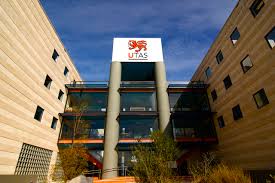
Legislative Council, Thursday 26 March 2026
Ms FORREST (Murchison) – Mr President, this bill has been a vexed issue for some time, an issue the government has certainly not covered itself in glory with, through its handling of this issue at large. The cynic in me sees this as a level of political game-playing and a desire for votes and power. Sadly, we find ourselves in that situation more often than we’d like in this place.
This is not a straightforward bill either, and I do not intend to treat it as one. I’d like to start with the university’s position. The University of Tasmania is under enormous financial strain. This is not speculation or political rhetoric; it’s a documented fact. But to understand it properly, we need to place it in a national context, because what has happened to UTAS has happened in varying degrees to almost every other university in the country.
COVID-19 exposed a structural vulnerability that has been building in Australian universities for years. The border closures wiped out international-student revenue overnight. For institutions that had quietly allowed their dependence on that revenue stream to grow well beyond what any prudent financial manager would regard as sustainable, the shock was severe. The truth, uncomfortable as it is, is that Australian universities had allowed themselves to become deeply, structurally reliant on international students to cross-subsidise everything from domestic teaching to research to capital investment.
When that revenue collapsed, the underlying fragility of university finances across the country became impossible to ignore. UTAS was not immune to these pressures. In some respects, its geographic position and student profile made the adjustment harder than for many larger metropolitan institutions, and the federal government policy settings added further challenge.
This forced all universities, including UTAS, to move quickly to online teaching and learning, and UTAS has actually been a leader in this space. This has enhanced accessibility to students from our regions and it’s meant that the on-campus experience is not the same. I know there are many people who hanker for their on-campus experience of the past. But if we stayed in the past, we will keep doing things in the past.
When I go back and look at that time – I didn’t go to university in Tasmania. I did my masters in midwifery through the Flinders University by distance. I never set foot on the campus, not once, and I have my masters degree. I’m a pretty typical north-west kid. Even though I found it hard to accept this for a very long time, that I was smart enough to go to university, I think I’ve proved that I probably am, and was, through my work in Flinders.
It was such an elite experience to come to UTAS in Hobart. It was privileged kids who went, not an average little girl from Riana. I don’t know any of my friends who went to university at that time. I did think about doing law; that was what I sort of wanted to do, but it was just like, ‘No, can’t do that, you got to go to Hobart, you got to have money, you gotta do nehn-nehn-nehn, you got to all the things’ – don’t know how Hansard does that ‘ni ni ni’ bit – but you’ve got to do all those things, and it was a completely elitist experience. I think we forget that.
The on-campus experience that is hankered after by many people, including people of my husband’s generation because he was one of them. He probably didn’t work anywhere near as hard as he should have, certainly in his first year – I won’t repeat stories that I’ve heard or he’s told me, but it was part of the culture of the time. Now today, a lot of students don’t have the benefit of spending time sitting around, not having to work. Back then, they had wealthy parents, not in all cases, but they had means. Then, there was that period of – Remember, free university education? Remember that?
Mr Hiscutt – No.
Ms FORREST – No, you wouldn’t, because you’re too young. It was a time when students weren’t required to work, and maybe put it off while they had families, things like that because they couldn’t do it all.
That’s the change[TBC] that is now, but back in the day you didn’t have to worry about working and the university cohort then was generally much younger people. I urge members to go to the Cradle Coast campus to have a look at the student cohort there. They look like me, old people, a lot of them. There are some nice young ones, too, but there are a lot of old people there as well and a lot of those are first in generation university attendees. I know it for a fact that there’s a significantly higher rate of Aboriginal students in our Cradle Coast campus.
Ms Rattray – 20 per cent.
Ms FORREST – 20 per cent. Which is extraordinary.
I absolutely understand that a lot of people, particularly of a certain generation feel an enormous loss of that sense of the way our university campuses used to operate and I absolutely accept that. I want them to understand, and the member for Nelson asked us to think about our own electorates, I want members in this Chamber to understand what it was like for members of my community before we had our own campus.
To move back to where I was sorry, from that little diversion. The recovery from COVID has not restored to the pre‑pandemic model and nor should it in my view. It was always on a pathway of destruction in many respects. Federal policy has since moved to actively curtail international student enrolments, recognising that that reliance was unsustainable, not just financially, but in terms of the social licence universities depended upon and that’s just not just here, but across the country. The days of offsetting the decline in Commonwealth support and stagnant domestic fees with the ever‑increasing international student numbers are over. In my view, as I said, this is the right policy decision, but it does leave universities, UTAS included, with a structural funding gap that’s not going away. This is the reality in which this appears before us. We need to add to that declining per-capita Commonwealth funding in real terms and expectations that universities teach a broader range of domestic students for less money per head and a capital investment requirement that has been deferred for years.
Now, you could argue that UTAS shouldn’t have deferred the capital investment. It’ not an argument I’m going to engage him right here, right now, but you have structurally challenging buildings to upgrade and modernise in the way that contemporary teaching learning does need in a lot of disciplines.
Those pressures are not temporary, they’re structural and they come at a time when the university has real pressing unmet capital needs, particularly in STEM and no ready source of capital to meet them, as many members have alluded to. If we are to attract students to STEM at UTAS, we do need contemporary facilities ‑ just a small diversion to the issue of what brings people to a university. I went to my AI chatbot as well, but I asked it to show me the research on this. I didn’t just rely on what a chatbot might tell me. I asked it to look at the research. Most of the research is out of the US, which I don’t think is entirely comparable, but there is some Australian research and it did look at Australian research. I said, ‘No, I want to bring Australian research back you go.’ It says the key things are:
- Academic reputation and quality, which I think is a pretty much a no brainer because no one is going to go to a university that doesn’t have a strong academic reputation. We heard about the reputation of UTAS in some areas – I haven’t looked at the ranking in all of them, but I know they do a really good job in many areas.
- The program of study. Is the course you want to do available? Clearly, you’re not going to go to a university that doesn’t provide the course that you want.
- Job placement rates. How likely are you to get a job from the university that you go to and the degree that you received?
- The location and cost of the course – because its not free anymore and the accessibility.
- Varying studies also showed around 30-45 per cent said the facilities mattered as much in their consideration, in terms of being contemporary, and meeting the needs of the course they’re doing so.
I think it’s safe to say that there’s no one thing that drives students to a particular university, but there are key issues that they all look at, and they are the things I’ve listed.
Obviously, if you have buildings that can’t meet the contemporary needs of the student learning experience or the requirements of the course – now, the way we taught some science subjects in the past is quite different to now. AI wasn’t a thing a while back. You can teach that in many settings, but you have to realise that not everything stays the same, so what might have worked in the past – and yes, you can contemporise buildings like Trinity College. I did a bit of research on Trinity College too, interestingly, and they described that as an outlier because it’s a major tourist attraction. It was interesting to look at that. But, yes, looking at some of the old universities – they’re beautiful. They often have a lot more money behind them too, a lot of them, but that is a separate issue.
If we want to attract students to STEM at UTAS, we do need contemporary facilities because when new equipment becomes available, you can’t always retrofit it into the current space. I learned some of that when I went for a site visit about some of the new shiny equipment that needs to be fitted in that may require very thick walls or walls that prevent radiation and things like that. Lead walls and that sort of stuff, perhaps. You can’t always necessarily repurpose an old building without major construction and changes to it. We all need to realise that, what might seem like a simple solution to the outside may be much more complex when you actually look at how you are going to do it. I’m not saying it can’t be done, I’m just saying I’m not sure that we can make this broad statement.
I’ve visited the campus at Sandy Bay, I have been to The Forest building, I’ve been to the northern campus in Launceston – beautiful campus – and I’ve obviously been to the Cradle Coast campus many times. I’ve observed the very real challenges associated with the current facilities at Sandy Bay in a rapidly changing world that demands flexible learning experiences and spaces. How you deal with that is a question, of course, but there are real challenges. I just want to make that point.
The stakes here go beyond the university’s balance sheet, however. Tasmania’s technology sector currently contributes $1.1 billion to the state economy and it is projected to triple by 2035, creating 21,000 new jobs. Yet right now, 31 per cent of workers lack critical digital skills and more than 1500 businesses report shortages. The number of Tasmanians holding STEM related qualifications sits 25 per cent below the national average. That’s not a good position to be in if we wanted to lead the way in many of these areas. UTAS’s STEM buildings are among the oldest on the Sandy Bay campus and I tend to agree that a lot of them aren’t fit for purpose anymore. Whether you can repurpose some of these buildings is not for me to determine because I’m not the expert in that. I know the building where the medical students used to be has been empty for a long time and we now look fondly at the Menzies Research Centre when we drive down the road. Enrolments in STEM have declined as a result. At a time when STEM enrolments are growing nationally, we need to keep this in mind. We need to get our share of STEM students, attract them and keep them. We cannot attract the engineers, scientists and digital specialists our economy needs into the facilities that belong in another era, because things don’t stay still in these areas.
As we know, investment in facilities works. The Cradle Coast campus redevelopment has seen the local applications increase by more than 100 per cent. We have the state-of-the-art nursing lab there. We will see it on my electorate tour, it’s magnificent. The new Inveresk campus in Launceston has become a thriving centre of learning, research and innovation. So, when the environment is right, students follow. Members from down this way may not have been into those campuses when they’re fully operating, but they really are beautiful and very lively places.
These issues matter because the bill before us cannot be properly evaluated without understanding what the alternative actually is. The alternative is the current environment is not a better process leading to the same outcome in due course. The alternative, realistically, is a third consecutive failure to fund new STEM facilities in an era where federal government capital grants for universities has effectively dried up, where the university’s balance sheet cannot carry the load and where our state’s own fiscal position offers no relief. In the competitive global market for investment capital and future STEM capability, there is also a timing imperative. Tasmania actually needs to be positioned to act. That is the context in which I approached its bill and considered whether or not to support it.
The university’s history on the site is worth recounting briefly, because it does shed a bit of light on how we arrived here. In the 2000’s, when other universities were investing in science facilities, because they all were, UTAS deliberate and, as it turned out, wise decision, in my view, to invest in the Hobart Medical Science Precinct: the Menzies Research Centre. That investment was made possible by federal capital funding opportunities that existed at the time. Half the university’s enrolments and revenue are now health related. What a good move. Excellent move. I did wonder about the outside of the building for a little while, but I think it’s fine. That is a tangible return on a well‑directed decision. My son had an opportunity to spend some his years doing his medical degree in that building. The IMAS building on the waterfront is nation‑leading in climate and Antarctic studies. Same time and similar money were available. The Hedberg – what a beautiful building that is. These were also funded with federal contributions available in that era.
The STEM precinct proposal, developed through the Infrastructure Australia business case in 2017, was conceived in the expectation that comparable opportunities might exist. Well, they don’t, sadly, and the world has changed. We all know the university has tried to progress this before. People say that we’re just jumping straight to this, as a solution, is not true. In 2017, it sought permission to sell parts of the Sandy Bay campus. The absence of a strategic master plan led to that proposal being rejected. A Sandy Bay master plan was subsequently developed and never meaningfully considered by Hobart City Council because of the community response to the concept. That’s where community voice is important and was heard.
Now, here we are, where decisions are being made, not to build STEM in the city, but to try to build a new facility at Sandy Bay on the campus below Churchill Avenue. This is the legislation we’re here with now, to give some pathway to that. I don’t say any of this to dismiss community concern, because it’s genuine. I’m trying to be honest about the cumulative cost of delay here. This is not something that UTAS realised this year was a problem. STEM students in Tasmania have been waiting for these facilities for the better part of a decade. That too is a real cost, even if it’s hard to see than a contested planning process.
Before I turn to planning concerns, I want to say something that’s personal to me as the member for Murchison because this bill is not just about Sandy Bay. I’m going to go back to the member for Nelson’s comments, which was to think about the fact that if this was happening in your electorate. Plenty of times things have happened in my electorate and people haven’t always taken that too seriously, but this isn’t just about Hobart or Sandy Bay or the electorate of Nelson or any electorate. Our job is to make legislation for the state.
As I mentioned, the Cradle Coast Campus in Burnie is for the north‑west of this state – something more than a university facility. It’s a statement that higher education belongs there, not just in Hobart. Not just for those with the means and the freedom to relocate. For much of our history, the assumptions, often unspoken, more often simply acted upon, was that if you wanted a university education, you left. If you could afford to leave, that was great. You left the north‑west, you left your family, you left your community, you left your footy club, your cricket club and your netball club. You left your job. A lot of young people have jobs up in our regions. If you couldn’t leave, if you had caring responsibilities, if you couldn’t afford it, if your life was actually there in the north‑west, then a degree simply wasn’t for you. That’s how it was. That assumption is now, thankfully, in the past. The Cradle Coast Campus, established in 1995 and transformed through a $40 million redevelopment, opened in 2021. That has done more initiatives for the north‑west coast than I can name in terms of the access to education, opportunities for employment, retraining, all the things.
Research that has been conducted about the campus -the fourth campus – documents that practitioners on the ground have what they have long known: students at regional campuses like Cradle Coast are frequently from lower socio‑economic backgrounds, are often the first in their family to pursue a tertiary qualification, and carry diverse caring responsibilities far more than large metropolitan institutions, which are generally not designed to accommodate. These are not students for whom university was ever a given. For many of them, the existence of a campus in Burnie – a campus they can reach without uprooting their lives – is the reason they are there at all. If it wasn’t for that, they wouldn’t be there. All those nurses that will be graduating from the Burnie campus, the doctors who are doing a full medical degree at Burnie, some of those will stay in our region.
When a student from Ulverstone, Circular Head, or the west‑coast completes a nursing degree at Cradle Coast and goes to work at the North West Regional Hospital or in the community health setting, that is a direct, tangible return to our region and it cannot be understated. When a graduate teacher walks into a Burnie classroom, that’s what the Cradle Coast Campus is delivering for us. Now we will have doctors walking out of there into our hospital there. The university’s own compact with the commonwealth acknowledges frankly that the regional campuses create a genuine diseconomy of scale, smaller class sizes, more intensive teaching per student, and the cost of maintaining and staffing multiple sites. Yes, this is a regional model, a hub‑and‑spoke model with the Cradle Coast Campus at Burnie in the centre and the student profile of these campuses requires a more substantive investment per student to achieve successful completion.
In plain terms, to make it really clear what I’m saying, is that the Cradle Coast and the northern campus in Launceston are cross‑subsidised. They’re cross‑subsidised from UTAS down there in Sandy Bay and in the city. They’re not fully self‑funding. When we had the evidence in PAC, I think it was $40 million to $60 million in cross‑subsidy. That’s a lot of money of cross‑subsidy coming from here to there. It’s a good thing that happens that way. We don’t get much out of Hobart, but we do in this regard. The campus down here sustains the broader university’s presence in the north of the state. But we do know that the university’s financial position is under serious and sustained pressure. That’s the reality and this matters enormously for what we’re being asked to decide today. If UTAS’s financial position deteriorates to the point where it can no longer sustain that cross subsidy, if the Hobart campus can no longer carry Burnie and Launceston. Where’s the easiest part to cut money?
The consequences for regional Tasmania could be severe and lasting. I’m thinking about my electorate, Mr President, I am. I hope other members think about my electorate too. We will not just lose a building potentially or a course offering, we will lose the hard-won proposition that higher education is for everyone in this state, wherever they live, and I won’t be one to allow that to happen without a fight. I will fight with UTAS if I have to on that.
I think others would agree with me UTAS got itself into this position in many respects and that’s been well documented through some poorly timed and considered decisions over many years, not least the over reliance on international students.
If it could turn back time, as with many decisions made by many of us, they may have made some different decisions.
The reality is UTAS is in a financial world of pain, and we don’t need to add to it.
We must demand better and hold UTAS to account for that position. And that’s one of the reasons I propose that the Public Accounts Committee inquiry into UTAS financial position. UTAS does have a huge body of work to do to correct their financial trajectory, along with just about every other university in the country except for the big 8 probably not so much, but all the other regional ones or not big 8 universities.
I now want to turn to concerns about this bill that I take seriously because they are serious and other prosecuted this in their contributions too.
The criticism has been put to me most forcefully goes to Section 7 and as members have also spoken of. The automatic rezoning of the land above Churchill Avenue to the inner residential zone. I want to acknowledge directly that criticism has genuine merit.
Planning experts have pointed out that parliament is once again acting as a de facto planning authority and doing so this time without the expert assessment that has at least informed comparable decisions in recent years. This is the government acting perhaps without due thought sometimes
I have opposed other planning approval related legislation in the past. I think the Member for Elwick spoke about that, putting the reasons clearly on the record.
The Huntingfield Housing Land Supply Order, contested as it was and not seeing any meaningful progress for years after was rushed through this place at least did go through some consultation, professional assessment and structural planning processes. This was public land dealt with under Housing Land Supply Act, an act that is restricted to public lands, so not a good comparator.
In this case, a range of zones was applied based on a master plan, not a single blanket zone applied arbitrarily.
This bill does not replicate that rigour in section in relation to section 7, and perhaps that is a change that could have been contemplated.
I want to acknowledge her, but something that tempers this criticism to a degree. The land is not currently without planning context. It sits in the particular purpose zone, the University of Tasmania Sandy Bay campus under the Tasmanian Planning Scheme and the local area objectives within that existing zone explicitly acknowledge that the upper campus is an area in transition, as the university divest itself of redundant assets and at future use of development of the upper campus will be reviewed and subject to further applications for amendments under the local provision schedule.
In other words, the existing planning scheme has already anticipated that rezoning or changed use of this land could or would occur.
The question parliament is being asked to resolve today is not whether rezoning is appropriate, that’s been effectively anticipated, but what zone and through what process.
It is also relevant that is not entirely uncharted to planning territory. The university engaged in a range of consultants for the 2021 Sandy Bay master plan including ERA Planning and Environment and All Urban Planning with the extensive work covering community engagement, conservation, management, planning, heritage impact assessment, economic and market demand analysis, traffic assessment and Aboriginal heritage.
The outcomes that work supported at high density residential as the best use of this land. You don’t have to agree with that. That’s just what it said. The inner-residential zone is consistent with neighbouring zoning on the north and aligns with the ongoing strategic objective of increasing residential density in areas close to the Hobart CBD. This is an objective reflecting the Hobart City Council’s own discussion paper for the Mount Nelson and Sandy Bay Neighbourhood Plan. We know the pressures on housing; it makes sense to build housing in areas close to services, close to the CBD, close to transport, all those things. We learnt that the hard way when we built settlements out in the sticks with no services and no transport. That was a bad decision.
The university also engaged directly with the council at a meeting in November 2025 on the future of the campus. The argument that the inner-residential zone might make sense for much of this terrain, complex topography, infrastructure constraint, environmental sensitivities has not been made with any publicly available planning analysis – and other members have spoken extensively about that.
The honest answer appears to be that inner-residential was chosen to maximise the land’s financial value not solely because it represents the outcome of rigorous planning that that will deliver. I understand why this decision was made, and I do not think it should go unremarked nor unchallenged as the only zone that could be considered.
The government has advised that a mix of zones was considered through earlier planning work, but that the single inner-residential zone was applied across the site to provide flexibility and avoid predetermining outcomes across different parts of the land. It was also noted – and this is important – that applying the zoning does not mean the entire site will be developed at the highest density the zone permits; detailed outcomes will still be determined through the normal planning process. I believe it’s important to remember that, because that seems to have been lost in this debate a little bit. Detailed outcomes will still be determined through the normal planning approval process.
There is also real concern for the Hobart City Council. The council is currently midstream on strategic planning work for the broader surrounding area. Legislating a predetermined zone for a large, strategically positioned parcel of land is a big process; it is not just procedurally untidy, it distorts the strategic picture the council is working on. You have all these competing things happening, and that may superimpose subsequent obligations on the Council that serve neither efficient development or sound urban planning. There are real challenges here.
There is the further irony, one that I think the university could perhaps reflect on, which is that the bill itself in subsection 9 of section 7 appears to contemplate that the inner-residential zoning is something of a holding position, capable of being changed through future rezoning. That’s how I read it. If that’s so, we should ask what the long-term planning purpose of the legislative zoning serves. If you look at section 7, subsection 9, you can go through the usual process – some, including me, would say the proper planning process – that could change that zoning. It’s not a set and forget.
This is a legitimate question: is that deliberately there so that in the future, should things emerge that make it not appropriate for inner-residential, that that’s the process?
Because this bill legislates a specific zone, and because that zone will govern what and can happen on this land for potentially many years, I sought to understand what the inner-residential zone actually means in practice under the Tasmanian Planning Scheme. These matters both challenge and support my decision on this bill.
The inner-residential zone is the highest-density residential zone in the Tasmanian Planning Scheme. Its stated purpose is to provide for a variety of residential use and development at higher densities, the efficient utilisation of infrastructure, and some limited non-residential uses that primarily serve the local community.
On paper it maximises development yield, in practice on challenging terrain – this has been has been talked about by other members – that promise is considerably more complicated. Under the Zones Use table, a single dwelling requires no permit at all. Multiple dwellings – apartments, townhouses, units – are a permitted use, meaning a permit is required, but must be granted if the development standards are met – and I hope I am corrected if I am wrong in this; I’m not a planning expert.
This is what makes this zone financially attractive to the university, obviously: multiple dwellings as of right and densities in flat, well-serviced urban areas could support significant yield.
The development standards that apply are worth noting: the minimum site area per dwelling for multiple dwellings is 200 square metres, though this can be reduced if development contributes to a range of dwelling types or provide significant social or community benefit.
Building height must not exceed 9.5 metres above existing ground level. Site coverage is capped at 65 per cent. Setbacks from primary frontages must not be less than three metres. Private open space requirements for each multiple dwelling are a minimum of 24 square metres. These are what we call acceptable solutions; the ‘tick the box’ pathway to a permitted outcome. But the zone’s permitted uses and acceptable solutions are only the beginning of what must be navigated.
They operate alongside a suite of codes that apply regardless of the zone. It is these codes, not the zone itself, that will determine whether much of this land can actually be developed, and the density the inner residential zone theoretically allows. The landslip has a code that applies wherever the state’s landslip hazard mapping identifies risk. I’m pretty sure it’s the whole of the hill.
The government has advised that the area proposed for rezoning largely aligns with the existing development on the site and avoids the steeper slopes, water courses and significant areas of native vegetation. Some areas of the site are subject to low and medium landslip hazard, but these areas are largely already developed for existing university buildings, which is itself evidence of a site suitability.
The government’s advice is that landslip risks at these levels will largely be managed through the building approval process. I note and do accept that, while observing that’s precisely the kind of site-specific information a proper structured planning process would have documented publicly from the outset.
The Bushfire-Prone Areas Code is also relevant. Fire travels faster uphill. The government advises that the bushfire risk can be appropriately managed through future development on the site, with the code applying to future subdivision proposals and individual buildings, addressing the matter through the building approval process. Again, I accept that. But construction cost premiums in a higher bushfire attack level areas can be substantial, and some development configurations can become unviable. These are real costs that will affect achievable yield, and must be honestly factored into any valuation.
The Natural Assets Code applies in relation to priority vegetation, which largely corresponds to the undeveloped areas on the site. It currently includes the path to Rifle Range Creek, which has been excluded from the land subject to rezoning under the bill, which is a small portion near Proctors Creek near the northern boundaries included in the rezoning area.
The government has confirmed that the rezoning would not remove any protection under the Nature Conservation Act 2002. We’ve got Commonwealth’s Environment Protection and Biodiversity Conservation Act 1999 or any other environmental legislation that attaches to specific species or communities. That is an important assurance to have. I assume I’m correct on this.
On infrastructure, water, sewage and stormwater and road access, the site’s not flat as we know. It’s not an easily serviced greenfield site, and the roads are constrained. Stormwater management on steep terrain is technically demanding and expensive. These are not insurmountable problems, but they are real costs that potentially erode the financial return from the inner-residential zone that’s being used to maximise the likely return.
The government has itself acknowledged, in response to questions that satisfy the various requirements that relate to natural hazards and natural values, will require trade-offs in the design phase. These considerations will likely place a limit on the residential density achievable at the site, and that is somewhat below the simple density controls within the zoning.
The inner-residential zone specifically excludes tertiary institutions from permitted educational uses. In plain terms, as I understand it, under this zoning, a university campus use on this land will be prohibited. There is a certain irony in legislating a zone on university land that will prohibit the university of ever returning to it. I raise this not as an objection as such, as the land I believe is genuinely a service to university purposes, but as an illustration of how permanent and consequential a zoning decision actually can be.
However, this brings me to a provision in the bill, and I did mention it briefly earlier. It’s with regard to section 7 subsection 9, which says: (checked)
Nothing in this section prevents the future amendment of an applicable planning scheme in relation to the registered area.
On its face, this is a safety valve. It says that in a residential zone imposed by section 9 is not immutable. The planning scheme can subsequently be amended through the normal planning process to apply a different zone or a mix of zones to this land. This suggests that the inner residential zone may itself be more like a holding position. By including subclause 9, the government, and potentially the university, have effectively acknowledged that a proper planning process may yet determine a different zone that’s more appropriate for parts of this area. As I read that clause – and I have asked the minister to comment on this – because the bill, if it should pass, would take full legal effect and that would be the zoning: inner residential. What I understand is clause 7(9) preserves a pathway back to the normal planning process. It does not delay or soften the immediate effect of zoning the bill imposes, but I think that does need clarity.
The combined effect, as I understand, is that the inner residential zone applies with full force from commencement and the land becomes immediately subject to everything that zone permits, requires and prohibits, but future amendment pathways are available, subject to all the consultation, public exhibition, representation rights, and Tasmanian planning condition assessment that a proper amendment process under LUPAA would require. That’s not a fast process. That’s one of the reasons we’re here. I’m not saying that’s a good or a bad thing, but we need to be really clear about it because it may be that some parts of the site are not suitable for inner residential construction.
The inner residential zoning signals maximum potential, it doesn’t actually deliver it. The actual yield from this land, once landslip, bushfire, natural assets, servicing, and access constraints are worked through lot by lot, may be considerably less. That will be the challenge if this bill goes through, how much return can actually be achieved on the land.
I note that a conservative land value – the so‑called conservative land value of $100 million – has been calculated by UTAS and independently assured by Deloitte based on residential land values within 3 km of the site. These figures need to be understood in light of everything I just said. It may be conservative, but I wonder if it’s genuinely achievable. In my view, this is not an argument against the bill. It’s an argument for the government and the university to be transparent publicly about what this land is realistically worth under the zoning and what proper structure planning processes would have determined.
On the question of alternatives, the record is instructive here and I also considered it in my decision-making. In 2021, the university lodged the Sandy Bay master plan with Hobart City Council as a request for planning scheme amendment – the proper legislative process, one might say. It was withdrawn, following advice that the Hobart City Council was not going to support it. Critics of the bill would say that the answer is to simply let the normal planning process run its course. We do need to grapple with this history first. The normal planning process was tried. It’s not like it hasn’t been tried. It was – not to the full extent. It didn’t go to a council meeting – but, in any event, the decision or advice was not to proceed. The Hobart City Council has previously indicated it would not support the amendments required and without those amendments, the STEM precinct couldn’t proceed.
We are not choosing between this bill and a well-functioning, orderly planning process, in my mind. We are choosing between this bill and the near‑certain prospect of no outcome at all. It is a challenging position to be placed in. I’m a bit tired of being placed in these sorts of positions by this government, I might say, but here we are. That’s the reality. The comparison with Western Australia and South Australia is informative here as well. Although, perhaps not in the way that it may be intended. Both states have repurposed former university campuses to fund new facilities while enabling urban revitalisation. They did so through dedicated state government agencies. In Western Australia it was Development WA and in South Australia Renewal SA – with the proper planning frameworks embedded in the process.
Tasmania has no equivalent agency that could do that and that’s a genuine gap because it’s worked in Western Australia and South Australia. We don’t have that here and perhaps that’s another oversight. The right response to that gap is not necessarily to block the bill, it is to acknowledge the gap and find ways to reduce in the future. That’s a matter for the future, but it’s highlighted that there’s a gap here and a problem.
I’m also conscious that the critics of clause 7, when pressed for alternatives, arrive at a decision that the minister could direct the Hobart City Council under section 40C of the act[TBC] to prepare an amendment with binding timelines. That would be interference, too. That’s not nothing. It could be a workable mechanism, but it also is a mechanism with no guaranteed outcome. Imagine the community pushback on that. We have no defined timeline that this Chamber can scrutinise, so it’s a bit of a moot point in many respects.
We hear very clearly about the community sentiment about the way this has been handled and I think UTAS has done a pretty poor job on some of that. I’m not satisfied that this option provides the certainty the university’s funding position requires. If they were in a good financial position, we’d probably be having a different conversation.
Others suggest UTAS sell all the city properties, including the new Forest building – spelled incorrectly, but there you go, it’s the university – which to me is a diversion. A nonsense suggestion because it fails to acknowledge the really serious challenge that UTAS currently faces. The Forest building is built for a particular purpose and whether you like it or not, it’s a functioning, vibrant learning space right now and for any other developer to come along and buy it would have to repurpose it as something other than that, and the cost of that would be extraordinary. The price you might get for it would be nowhere near anywhere enough to fix the problem and you’d lose the facility. It’s a bit like saying we’re going to shut down the buildings above Churchill Avenue so we can sell them off and fund below, but you can’t do that, we need those until there’s a new facility. You just can’t do it. To me that is just not an option and not a realistic suggestion.
I also want to say something about the federal funding because it’s central to arguments related to this bill. The university has made it really clear that without some sort of state capital contribution, or some avenue for making some its own financial contribution -by selling property or something from the university itself – the chances of securing sufficient federal support for the STEM precinct is significantly diminished. You could sell all the properties in the city, but then what are you going to do? How are you going to educate the students who are currently in the Forest building?
A submission to the federal budget process, frames the proposal around the Future Made in Australia policy; renewable energy and advanced manufacturing, and the skills pipeline Tasmania needs for both. The federal funding request is in the order of $400 million. The university and the state government intend to, as I understand, the rezoned land as part of the overall funding strategy to support that ask.
The world changes every day. The federal government has been talking about cutting their spending and now we have this enormous problem with the Middle East war. Who knows what that’s going to do? I do accept, however, that federal capital funding rarely flows without demonstrated state or private sector commitment. That is a longstanding reality of Commonwealth-state funding dynamics. That’s how it works.
I want to put on the record that this conditionality should be tested and verified, not just accepted as a given on both sides of this debate. I would encourage the government to be transparent with us about the federal conversations that have occurred, what conditions have or could be indicated, and what the realistic future scenario looks like without the land contribution this bill would enable.
The argument for the bill is stronger when it rests on a demonstrated federal conditionality than when it rests on general assertion that federal support will be diminished.
I also note that the university is publicly committed to executing a deed poll, which would require it to use the value of the rezoned land solely for the Sandy Bay STEM Precinct. That’s what they’ve committed to; mind you, some of the government promises don’t hold true. That’s not the government. This is a meaningful commitment, in my view, an important protection. If the bill is supported, I would expect it to be honoured in that the money would be set aside.
I’ve looked closely at the bill and I’ve heard the arguments and listened to both sides. I absolutely agree that Tasmania needs UTAS to succeed. I don’t think anyone would disagree. I haven’t heard anyone disagree with that. That’s not a platitude, it’s an economic, social and educational reality of this state. The university cannot invest in its facilities, cannot attract students, and cannot support a STEM pipeline for the industries we are asking to drive our economic future, if the university is not financially sustainable, and they’ve got a way to go to get there. They can’t do its job for Tasmania.
Much of the Sandy Bay campus above Churchill Ave is, in my view – and I’ve looked at this from all angles – genuinely surplus to the university’s educational requirements. Remember, we are moving into the future, not going back to the past. The land will be developed in some way in the future, I believe. The question has never really been whether some parts of the land up above Churchill Ave will be redeveloped. It’s about how and when and under what process. I know that a lot of these answers aren’t clear in the legislation and the information we have before us. I absolutely accept that we’re in an invidious position yet again.
I think section 7 is in there because it reflects the urgency of the university’s financial position, more than reflects sound planning practice, that’s pretty clear. I think the government and UTAS should be perhaps very honest about that.
So why, given these concerns, will I support the bill (because I will)?
In my judgement, as frustrating as it is to see the current financial pressures UTAS faces, the imperative is to ensure that UTAS has the financial foundation to keep doing what it does for our regions, not just in Hobart. That is a significant part of why, despite my genuine reservations about aspects of this bill, I will be supporting it. Why? Because I’m persuaded that the financial necessity is real and that the alternatives have been exhausted or are not genuine alternatives in a practical, timely sense. The planning concerns, while absolutely legitimate, do not ultimately outweigh the case to proceeding.
Some may be quite surprised that I will support this bill, but I’ve been clear about why I support it and equally clear about the legitimate concerns it raises because members deserve an honest account of both. Not a cheerful endorsement of the process, but it has real shortcomings.
I am satisfied that the bill, on balance, represents the least-bad available path to an outcome that Tasmania needs, not just the university. A contemporary, funded STEM precinct, a more financially sustainable university, and a productive use of land that has sat unresolved for the better part of the decade.
It is with some degree of frustration and annoyance at the government and at the university for some of the handling of some of this, but I will support this bill despite all the frustrations and problems I’ve expressed.