

Legislative Council, Wednesday 28 October 2026
Ms FORREST (Murchison) – Mr President, after discussions with the Leader, it is my intention to speak till around 10.p.m. I won’t be finished by then, I don’t imagine. Then we will adjourn for the night and finish off tomorrow. I personally think that’s quite late enough to be working tonight, and we have a long and complicated day ahead of us tomorrow.
I rise to speak on the Firearms Amendment (Strengthening Firearms Security) Bill 2026. I support the principle of the bill and I will support it into the committee stage. I ask the Leader at the outset, because it may be helpful if she can get some advice on this, if she doesn’t already have it, if there are any specific time imperatives on getting this bill through this week. And if they are, what are they? It would be helpful to have some indication of that because I think, from my perspective particularly, there’s a bit of to’ing and fro’ing going on and this is really important legislation. We want to make sure that we get it right. It was heavily amended downstairs. The government itself had amendments it put forward. So, I would appreciate if you could do that, out of session even, to help me and other members as well, I’m sure, to understand whether we really need to go all out and spend no time sleeping to come up with the most appropriate form of legislation, which is not a good way to legislate, quite frankly. I ask the Leader whether she might be able to do that.
As other members have, I note the tragic events of Bondi in December last year that brought a renewed focus to firearms legislation across the nation. My thoughts continue to be with the victims and families of those 15 people who were tragically murdered. Really, I think when everyone stopped and watched that footage, it made you think, ‘How could this possibly be happening here in Australia?’. This year also marks 30 years since Port Arthur, the previous and the worst tragedy this country has ever seen, with 35 people killed. That time, this state and the nation acted. The National Firearms Agreement and the buyback that followed changed Australian in ways I think we should all be proud of. I note that there were call safter Bondi, as occurred after the Port Arthur incident, for national consistency. Well, that’s not what we’re getting here. We’re not getting national consistency. We’re getting some nationally consistent approach. Every state will do what every state wants to do but it isn’t nationally consistent and I think we need to be honest about that.
In that, we are Tasmanian. We are making law for Tasmania with a view to the National Firearms Agreement, absolutely. But it doesn’t mean we need to be just like any other state or not like another state. It means that we need to think about how this works best for Tasmania and Tasmanians. For those who hadn’t realised, Tasmania is a state different from other states. We have a very decentralised population. Less than half of our population live in the major city. Very different. We have many more people per capita involved in primary production. I know, and I think the member for Huon said, that the vast majority of Tasmanians don’t use guns. Well, I’m really pleased about that. The vast majority of Tasmanians also don’t grow food that we all rely on. The vast majority of Tasmanians, if given the choice, would probably say, ‘I’d rather have no guns in the state’. There was a survey I read that was done ‑ I don’t know about the credibility of it. It might have been our friends at EMRS that did it, from memory. It showed that around Hobart ‑ and I can’t really look at the numbers, I just was intrigued by the result – there was a number just in Hobart, not in the surrounds, not down the Huon, not down the Channel, not down the Channel and not down the Peninsula, but just around Hobart, who thought there should be no guns in the state at all. None. I don’t know what they thought the police were going to do when they were in real trouble, but it was fascinating. And then outside of Hobart, there was a view that there needs to be. How many should there be? Well, that was a different story. It just shows that sometimes those who live in the city take a very narrow view of what it’s like to live in Tasmania, because the vast part of Tasmania is not the city. And I represent an area that is not the city.
I note the minister is in the Chamber. He represents the same area that is not the city. There are so many people who work really hard to grow the food that we need. They have to deal with the vagaries of the weather, the vagaries of rising costs associated with global events outside their control, and the vagaries of vermin. The heartbreak you see from some farmers. My brother who has a firearms licence and shoots, he would go out some nights before we did all the wallaby fencing around the property and shoot 100 wallabies. He’d go to King Island and the shooters there – well, there’s millions of wallaby on that island. A lot of them died in the drought, sadly for them.
Ms Rattray – It’s exactly the same on Flinders.
Ms FORREST – I’m sure it is. You also have the deer that decimate our landscape. So, let’s keep our eyes up here. We’re not legislating for Hobart. We’re legislating for the state of Tasmania. Hobart’s in it, I know. The minister’s nodding – this minister, our minister –
Ms O’Connor – No-one is suggesting that we are legislating for Hobart.
Ms FORREST – I’m just saying that, obviously, that research was done that shows there are very different views. I think the views reflect the lack of appreciation of what it’s actually like on the land and the pressures that people are on.
Ms O’Connor – I also think it’s unreasonable to present the people of Hobart as having a homogenous view.
Ms FORREST – The people out there growing the food are under an awful lot of pressure at the moment. I’m just saying that from a context point of view because I’m not talking about guns necessarily here. I’m talking about the pressures that people are under and how it’s important that when we make laws in this state, we look at the whole picture. We talk about the number of firearms per capita in Tasmania. There are a lot more people out in the rural communities, they’re engaged in agricultural pursuits and a gun is a tool of the trade. A gun or sometimes more than one gun is a tool of the trade required to do that work. I just want us to keep that in mind, so we’re not losing sight of what we’re actually talking about here.
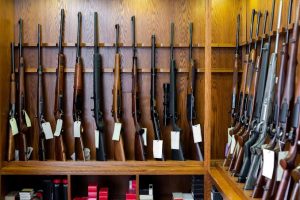
The purpose of the bill is to tighten up some of the gun control measures, and it’s not unreasonable to do that. Things move on, things change. We didn’t have this back in Port Arthur days. There were no 3D printers. There were barely computers, I think, back then, in fairness. We couldn’t have even contemplated a 3D-printed gun that worked. That was a bit sci‑fi‑ish, wasn’t it? But I do know the Commissioner of Police noted in her letter of 5 February to the minister that the impact of those reforms that we did following the Port Arthur massacre have diminished over time. In my view, partly that’s due to the changes in technology and the way some people, have found their way around the mechanism and restrictions, and the intent of the legislation. I think I mentioned in a briefing that I went to our local gun shop a few months ago, and they took me to a storage room where they had guns being held for collection by the police to destroy because they were illegal. There were guns being held for other people, predominantly people on family violence orders ‑ I was really pleased to see a line of guns there, I can tell you. I’m not an experienced gun owner, but when I looked at them on both sides, it was hard to tell that they were completely different, because these ones on this side were legal guns. Like, they were Cat A, Cat B rifles and guns. The other ones basically should be out of circulation – the police were to collect them and destroy them. So, just looking at it, I don’t know how you tell the difference. You would if you were experienced and knew what you were looking at, but I certainly didn’t.
The number of firearms in circulation nationally now exceeds pre-1996 levels. As with all legislation, we should review it against its purpose and its intended outcomes to ensure it remains contemporary and fit for purpose. We also need to remember that our population has grown ‑ not hugely in Tasmania, it’s up and down a bit, but it has grown since Port Arthur. Closer to home, the impact of the misuse of guns was starkly seen in the absolutely tragic murder of Constable Keith Smith on 16 June 2025, and my heart is with the police who lived through that. In the Commissioner’s words:
This is indeed a confronting reminder that a firearm can change the outcome of even a most routine policing task.
My thoughts remain with his family and colleagues, who live with that event every day, and I do absolutely acknowledge the very real risks our police face every day. They can be used inappropriately against our police ‑ a legally owned, normally properly stored until it’s pulled out to be used in that manner ‑ firearm. Whatever change we make will not entirely make our police safe, but our police are better trained than we are, for example, to perhaps know when there’s a greater risk and respond. But sadly, that’s not always the case.
I want to also acknowledge the many people in my electorate that will live with the detail and implications of this law every day. As I mentioned, the farmers who use firearms as tools of the trade, and in the sporting and recreational shooters who use them lawfully and responsibly. I think we do need to listen to them to be sure we don’t limit it beyond what’s reasonable ‑ and that’s the balance, and that’s the key.
Mr President, I also grew up on a farm where firearms were part of life. Back in the day ‑ this is showing my age, because the law has changed significantly since I was a kid ‑ but there were guns and ammunition in my home that were not locked away until our laws changed. In fact, the guns were beside the back door, ready to head outside. The hand basin was beside the back door and the cupboard beside the basin had all the ammo in it. That’s the way it was. It was just there, you know? I know Dad never left a firearm loaded by the back door, but it just beggars belief that, when you look at it now, that was just normal. It’s normal until it’s not, I suppose.
I also spent years as a nurse and midwife, where you can be, and are, exposed to the real harm that can occur ‑ accidental and deliberate use. Both these experiences, and listening to those in my community on this incredibly important matter, have taught me to look at harm through a public health lens as well as a legal one. We need to respond to reliable data and appreciate the differing points of view. They do need to be heard. As I said, I’ve seen the human cost of firearms used inappropriately, as I have the cost of car crashes and other forms of violence. Some of these things you can never unsee. I know that the police are in the same situation as well as our paramedics and other frontline staff. It’s just some things that, even accidents, real accidents, you just can’t unsee them. They’re still there. You can see them. You can smell them sometimes, too. It just doesn’t go away.
I bring both of these perspectives to this debate. Supporting the principles of this reform and taking the concerns of lawful firearms owners seriously are not in conflict, because good law should be able to do both.
Mr President, I agree that these are the most substantial amendments to the Firearms Act 1996 since its passage. We have had some minor – well, not minor, but amendments along the way, but this is a fairly major piece of work, and it also combines the antique firearms bill on the miscellaneous bill into this. There were a lot of submissions. I believe there were 646 submissions that were received across two consultation rounds, so there has been significant consultation. There has been some criticism. I’ve heard that not all the consultation was taken into account, but that’s the nature of it. Any bill that’s consulted on, there’ll be views that you take on board because they fit with the policy position, and there’ll be views that you read, acknowledge, but don’t take forward.
In summary, this bill does a number of things. It inserts a new object, Section 2A, making public health and public safety of the paramount consideration in the regulation of firearms. It moves straight-pull action and button or lever-release centrefire firearms and shotguns into Category C, which has been raised by other members, particularly with the straight-pull action centrefire. The straight-pull rimfire is not in Category C, as I understand it, but the straight-pull centrefire is, in this. I understand the reason predominantly for that is because they were the firearms that were used in Bondi. Obviously, if it hadn’t been those guns, I wonder whether we would be doing this if it had been a button-release firearm. But that’s what it is and that’s what’s brought us here, so I do acknowledge that. I will come back to that matter.
It makes Australian or New Zealand citizenship the default for licensing, with exemptions for permanent residents whose genuine reason is primary production and population control, animal welfare, or business and employment, plus the Commissioner’s discretion. It strengthens the ‘fit and proper person’ test, including the important inclusion of family violence history, patterns of escalating behaviour, threats and whether a relative or household member is not fit and proper. It requires 24‑hour notification of changes of address and of storage to another location for more than 24 hours. It formalises lending and borrowing between licence holders and prohibits on lending, and I do have questions further on about some of these provisions. It requires dealers to verify licences and permits supporting the National Firearms Register. It creates an antique firearms permit and registration regime.
It lets the Commissioner temporarily classify a new firearm type up to 24 months by Gazette notice. It creates a new offence of stealing a firearm or firearm part with up to 300 penalty units, or five years, and raises the penalty for possessing a stolen firearm to 300 penalty units. It inserts the presumption of at least three years’ imprisonment for firearm theft, possession of firearms, trafficking, and a section 234A Criminal Code offence, with exceptions for young people, impaired mental functioning, or where it would be unjust.
I acknowledge there were amendments made in the other place, and the bill, as had been introduced, would have let the minister prescribe new ‘genuine reasons’, and would have grandfathered reclassified firearms with no time limit. Both of these were removed, and the proposal to permit suppressors was rejected.
One more point I’ll make, and I’ll seek to adjourn the debate. I do support the removal of the open-ended grandfathering. I think that was, in my view, never going to fly, but I do note it does have consequences for existing law‑abiding owners. That’s the reality, but I will return to that.
Mr President, noting the time, being right on 10.00 p.m., I move –
The debate stand adjourned.
Thursday 29 October 2026
Ms FORREST (Murchison) – Mr President, before I commence, I wish to foreshadow that I understand I’ve got 40 minutes left with the clock ticking now. I may need slightly longer than the 40 minutes. There’s more information I want to relate. Thank you to the Leader for providing it. I’m flagging that and I ask that you might notify me when I’m getting close to that time. I may not, but I wanted to flag it now.
When I spoke last night, I started off basically with a request that the Leader indicate whether there was any urgency with this that needed to be dealt with this week. I’ll read what she’s provided to me, if that’s alright with the Leader, because I think it’s probably relevant for all of us, particularly those amendments still being crafted, et cetera.
What the Leader provided to me was –
Commonwealth funding for the National Firearms Register is paid in stages against agreed milestones. One of those milestones is passing the legislation needed for the register to operate in Tasmania. If that milestone is not met, funding and project delivery are put at risk. Tasmania’s project team is already in place, and the software developer has been appointed.
The system being built must reflect the requirements of the legislation. If the bill is not passed, there is uncertainty of what the system needs to do. That affects the system’s design and creates flow-on risk for future milestones. If this legislation is resolved during the November sittings, there is still a path to meeting the project deadlines, but if it’s not resolved this year, we are unlikely to have the legislative reform settled by 1 March 2027, which is a key milestone for the project.
At present, firearm information is held separately by each state and territory. Police cannot easily access a complete national picture of firearm ownership, licensing and registrations. The National Firearms Register will change that. It will provide police with near real-time access to information about firearms licence holders and registrations across Australia. It will also improve the ability to identify risks, trace stolen firearms and support investigations across state borders.
In practical terms, it means police will have better information available when responding to incidents. It means risks identified in one jurisdiction can be recognised in another. It also strengthens the ability to track firearms that have been stolen or diverted into the illicit market. As such, delays in the passage of this bill has the potential to delay a real reform to make Tasmanians safer.
I do appreciate that, Leader, that you’ve provided that, but I do note that says we need to do it this year. We don’t need to finish it today, and I think that’s probably an important point if depending on how things go.
I sincerely appreciate that. I know there is an imperative and we don’t want to be leaving it to the last week because there are amendments. Bit sad because we’re on our own that week. Surprisingly, and quite stupidly. Anyway.
Back to where I was. In her contribution on this bill, the Leader asked members to keep the new paramount principle of public health and public safety firmly in mind when we consider this bill. That’s the way I have and will approach this bill, including when we consider any amendments to firearm numbers and or caps, is the term that’s used.
A principle described as underpinning every reform should be applied consistently, not only to the reforms the government has chosen. I will fully consider the amendments that have been foreshadowed in that context, as well. I would appreciate more detail on the impact of lowering the threshold at which the commissioner may act for reasonable cause to believe a risk exists to a foreseeable risk that is not insignificant.
To me, it doesn’t seem like a huge change, but I’m just trying to understand what that’ll actually mean in practice. I appreciate the intention that this should allow action before harm occurs rather than after, which is ideal to make it a truly preventative approach, but I would like a little bit more detail on the application of clause 20, is where that appears.
We know family violence risk is so often visible in patterns of behaviour long before a conviction is recorded, and it only takes one gun to be used as a threat. You don’t have to have a whole cache of weapons to put a victim of family violence in the position of fear or coercion. With a greater focus on, and awareness of, coercive control used in many abusive relationships, we know sometimes the first act of physical violence can be murder. That could be the first thing. We know that from the tragic events in Queensland with Hannah Clarke. That was the first act of physical violence. She was murdered along with her children. We need to ensure as much as possible the safety of women and children who are the most likely victims of such abuse, but also those men who are victims as well. We know that men kill men with firearms, too.
Third, I note the Leader’s assurance that registration of antique firearms will be free of charge and straightforward. That’s a sensible and proportionate approach for genuine collectors. I know there are many who have heirloom firearms, some dating back to various world wars.
The Leader also said, quite rightly, that the reclassification is directed at firearms capability, not at the lawful firearms community. I’m not sure they entirely see it that way – the legal firearms owners and users – but I accept that’s the intention. But I think there are a lot of people out there who operate entirely lawfully in a safe way, correctly storing, and all the things that we ask of them, and they feel that they’re being indirectly and disproportionately targeted by this.
I do note – and I did mention this earlier – that with the grandfathering removed and no buyback detail before us, it is the lawful owner of a reclassified firearm who carries the practical cost here, and I think we need to remember that. These people are people who’ve been acting lawfully. They’re not people who are criminals. These are people who are doing the right thing under the arrangements that were in place.
Finally, the Leader stated the government does not support arbitrary caps on firearm ownership. I agree that any cap really shouldn’t be arbitrary. The question for this House is whether a cap can be designed that is evidence‑based, proportionate, appropriate, and workable. That is a different question, that’s how I’ll approach the amendment when we get to that point, as foreshadowed by the member for Rumney.
The case for this bill needs to, and does to a large extent, rest on evidence. According to numbers I’ve been provided with – and other members have quoted various numbers as well, and most of these will be consistent – but I understand there are 157,022 registered firearms in Tasmania, held by 36,598 licence holders. That is an average of more than four firearms per licence holder. Almost 9000 licence holders own six or more, and 1541 own 11 or more. A Right to Information request reported in the Mercury in February found 44 people had more than 50 firearms and one held 309. I’d just be interested to know of that person, the 309, are they a collector? Why have they got that many? Because I assume they’d have to be a collector. They may have a whole heap of firearms that are not operable and all that sort of stuff, but you still do need to register them.
I’ve met with members of my community who have heirloom rifles or guns that have been handed down and they may, if a cap is put in place, they may have their cap – whatever the number is right now – legally, lawfully would still remain legal and lawful – but they’re expecting – well, they know, that when a parent passes away, they will inherit a firearm. Then what do they do? If there is a cap in place, what does that mean for them? They have to give up one of the others that they’re holding lawfully and using lawfully or what? It is a bit fraught, and I’ve met with people who will be in that exact situation.
I make no assumption about any of those owners, that they’re acting unlawfully, but the concentration does matter because firearms that are stolen do not stay with the lawful owners and may never be recovered. In fact, it seems very few are recovered, which is a real concern to police and to us as some people who rely on the security and safe use of firearms for our own safety, but particularly for the police who have to go out trying to recover and find these firearms but also, as I mentioned last night, the very sad circumstances about Constable Keith Smith.
I have seen evidence suggests Tasmania has the highest rate of firearm theft in the country. The Australia Institute’s report, Firearm Theft in Australia, published in October last year, compiled police data from every state. It found around 29 firearms stolen per 100,000 Tasmanians, against the national average of about eight. Nationally, at least 9287 firearms were stolen from 2020, roughly one every four hours, and the available data suggests around three quarters are never recovered. The report concludes that theft of legal firearms is now the main way for the illicit pool of firearms to grow; ahead of 3D printing and illegal imports. I’ll go back to the point I made at the outset, that we have, per population, more people engaged in primary production and living in the rural community than jurisdictions such as Victoria, which have a large rural community but the majority of their population lives in the city and has very little use for firearms, one would hope. When you compare statistics like that, it doesn’t necessarily tell the whole picture.
The commissioner’s own submission tells the same story. Firearm theft incidents rose from 37 in 2021‑22 to 40 in 2025‑26, and the number of firearms stolen rose from 121‑149, the average per instance from 3.3‑3.7, so it is an issue. If there are more guns in one location, the chances of more entering illicit or unlawful ownership are real. The Australia Institute notes that Tasmanian and Queensland – the only jurisdictions that report it – have both seen the number of firearms taken per theft grow since 2018. Gun Control Australia cites the police Firearms Dashboard for August 2025 to July 2026, 164 firearms stolen and only 33 recovered, a recovery rate of about 20 per cent. I note that the minister told the other place that firearm thefts have fallen even as firearms numbers rose. The commissioner’s five-year figures do not appear to show that, and the Leader’s second reading speech did not address it and I ask the Leader if she can reconcile the two. I have sent that question through and I know that a response has been prepared.
Other trends point the same way. Firearms offenders charged rose from 456 in 2021‑22 to 672 in 2025‑26, an increase of 47 per cent. Licence cancellations rose from 65‑272, quite a jump, in that same period; and suspensions from 230‑342. Taken together, cancellations and suspensions have roughly doubled, so one would say the system’s working there and that the commissioner is using the power that she has to actually cancel or suspend, as required. Some of those suspensions, no doubt, relate to family violence matters where the firearms are removed and stored safely elsewhere, but it does show that that is have having an impact.
Gun Control Australia has drawn the Council’s attention to recent incidents reported in the Mercury. There were 15 firearms stolen from a Coles Bay property in July, which was then burnt down; the owner assaulted and none were recovered; and that was a truly tragic event, and I really feel for the victim of that crime. Six firearms were stolen from a Southern Midlands property where the keys had been left on top of the safe. Not a good idea, Mr President. This comes back to safe storage. A shot fired in a Rokeby street required the Special Operations Group. In Purton v Clark, the Supreme Court considered a Launceston recreational licence holder with 32 firearms, a thousand rounds of unsecured ammunition, two silencers and six firearms were not properly stored. They’re the people we need to really go after. That’s pretty poor – well, actually it’s extremely poor.
This suggests the risks are not only from the criminals who never had a licence who may steal firearms, but also lawful firearm owners or who have lawful firearms that are not stored correctly or sometimes are stored correctly but stolen nonetheless and passed into the illicit market. This is where it comes back to the rigour in which the police are able to undertake inspections and check on the secure storage, but you might be there one day and the next day they leave the keys on top of the safe. There’s no perfect solution here; we need to accept that.
Interviews with offenders convicted of serious firearm crime suggest theft from rural properties is often a routine source. So, we know there’s a risk there. We know that in a rural property, the guns are stored in a safe storage facility, varying depending on the category of the firearm, the property owner will be out working on the land for the majority of the day. If someone who’s intent on stealing those firearms, watches that property for long enough, they’ll see what the movements of the farmer actually are and can pick their time. Hopefully, the safe will be impenetrable – it depends how much time they have to deal with it – but it is a risk and we know that it is a greater risk there because it’s in an isolated area, the homes are not necessarily visible from the road, all that sort of thing. From that, I suggest we need to ensure the police have adequate resources to undertake regular and intermittent unannounced inspections to try to respond to some of these matters.
The research literature on firearm availability and harm is extensive, and I appreciate those who have directed us to it. However, I want to be careful about what it does and doesn’t show, as I know much of the evidence and the research we’ve been provided with is out of America, and whilst some of it is relevant and applicable, they do have, as we know, a very different approach to gun ownership and storage. In 2013, a study in the American Journal of Medicine by Drs Bangalore and Messerli examined 27 developed countries and found a strong correlation between firearms per head of population and firearm deaths, with a correlation coefficient of 0.8. Firearm ownership remained a significant predictor after accounting for the burden of mental illness, which was of only borderline significance. The authors were careful to say that correlation is not causation. We need to keep that in mind as well.
The starkest comparison is our own with the United States. The United States has around 120 civilian firearms per 100 people. Australia has around 14. We know about the American right to bear arms; that’s just the way it is and if you visit the States it’s not uncommon to see normal civilians with firearms visibly on display, like – well, they appear to be normal civilians. The United States records close to 47,000 firearm deaths a year, a rate of around 14 per 100,000. Australia’s rate is about 1 per 100,000. That’s Australia. So, our laws do work and, as I said the outset, we should be proud of the changes we made and all proud of good John Howard, former Prime Minister. I didn’t agree with some of his policy approaches, but this took real courage for him to stare down the gun lobby at the time and put in place some really effective and good legislation.
In other countries the evidence points the same way. In work published by the National Bureau of Economic Research and the Journal of Political Economy in 2001, the economist Mark Duggan found that changes in gun ownership across US states and countries were closely related to changes in gun homicide, but not to homicide by other means. He estimated that falling household gun ownership explained at least a third of the decline in gun homicide in the 1990s.
On suicide – I will speak about suicide, Mr President, which can be triggering for people, so I want people to appreciate I’m going to speak about that right now. The evidence is most confronting. A 2014 meta-analysis in the Annals of Internal Medicine by Anglemyer and colleagues pulled 16 studies and found access to a firearm in the home was associated with around three times the risk of suicide and twice the risk of homicide, with women at significantly higher risk of homicide.
The largest single study published in the New England Journal of Medicine in 2020 by Studdert and colleagues followed 26.3 million Californians for up to 12 years. Men who acquired a handgun had nearly eight times the rate of firearms suicide of men who did not. For women it was 35 times. Importantly, handgun owners did not have lower rates of suicide by other means. This is not simply a substitution of method. While risk peaked straight after the first acquisition, more than half the firearm suicides among owners happened more than a year later.
In the US, people can just go and buy a gun and so that real risk of using the gun to affect a suicide soon after the purchase is a real issue. That’s not how it works here in Australia. It doesn’t mean that the risk is not there. If there’s a gun lying around and someone is in a terrible state where they see no other option, they see no future for themselves, and if a gun is available and not secured, then there is a risk. I also know from my experience it doesn’t always work. And that’s nearly worse.
For young people, in 2021, analysis of a nationally representative sample of more than 10,000 US adolescents concluded that living in a home with a firearm increased the risk of suicide three‑ to four‑fold. Again, I do note the US takes a very different approach to firearm ownership and storage.
As I noted, I do not want to repeat the limitations of this research and its applicability to Australia. As I said, much of this is American and thus has a very different impact because we have totally different regulatory and storage requirements. Most of this research measures access to any firearm, not the number held by the individual owner. Some of the cross‑national work suggests firearm availability shapes the method of suicide more than the overall rate, although the Californian study, at an individual level, did not find that offset. This research supports secure storage, keeping firearms from people at risk, and on its own it doesn’t settle the question of caps. It only takes one firearm to do that.
It does remind us that suicide is the quiet harm in this debate. Rural men, including farmers, carry a disproportionate share of that burden. These are property owners who lawfully own and lawfully use firearms regularly in their work. A firearm in a moment of crisis leaves almost no room for intervention or a second chance. When we see the pressure that farmers come under at times, like in a drought, or other financial pressures like the cost of fertilisers and the cost of fuel at the moment, all those sorts of things, put huge pressure on farmers. Caps won’t fix that. It only takes one, and the majority of them would have one at least.
What we need is really good mental health care, support for people who are struggling. That’s the problem we need to fix. But then, every measure that keeps a firearm out of reach of someone in crisis does matter. But suicide by means of a firearm is sadly not the only method. If a gun’s not available, something else is. It is usually quite a lethal method. It usually leads to success.
We do need to think about harm at the level of the whole population, not only the individual. Reducing access to the means of harm is a foundation of public health, from road safety to tobacco to gambling. A careful driver still wears a seat belt and obeys road rules. A careful drinker lives within the licensing laws. Those measures do not accuse anyone of being irresponsible. They recognise that the policy must protect everyone, including from the risks no individual intends. Victoria made seatbelts compulsory in 1970, the first jurisdiction in the world to do so, and Australia led the world on plain packaging of cigarettes. In each case, we acted on the best available evidence without waiting for certainty and we now have clear evidence of real measurable positive impacts. That’s the thing: do we wait for certainty or not?
As with these really complicated debates that have very mixed views in my community and across the state, I do want to make sure that people understand that I’ve listened to both sides of this.
In saying that, I do wish to speak on behalf of those lawful and law-abiding firearm owners, including farmers. For many farmers, including those in my electorate, a firearm is as important to their work as a fencing tool or a chainsaw. This is how they control rabbits, deer, wallabies and possums, protect crops and pasture, and meet their obligations to put down an injured or suffering animal quickly and humanely.
TasFarmers made that point clearly after the cap amendment failed in the other place. As Chief Executive, Nathan Coleman, described firearms as an essential tool of trade, I agree. The Leader also acknowledged the importance of firearms to prime producers, sporting shooters and hunters and collectors.
Farmers are not the problem this bill sets out to solve. The bill should not treat them as if they are. To its credit, TasFarmers engaged constructively in its submission, supported tougher penalties for theft and possession of stolen firearms, the restriction of on-lending, broader definitions of firearm parts in the age of 3D printing, dealer verification and extending prohibition orders to parts, ammunition and suppressors.
TasFarmers and many I speak to are not people resisting reform, and we do need to listen to them and understand the reality of rural life. If we want the food they produce, we need to listen.
They also raised practical concerns. TasFarmers does not accept that straight-pull and lever or button-release firearms belong in category C, which was created for semi‑automatics. In more recent discussions I’ve had, some of them have shifted that a bit. It’s really the straight-pull centrefire that is in category C that they have real concerns about not being able to access. Primary producers will be able to access those firearms; it’s the people who do the work on their behalf. But these are the firearms that have helped primary producers manage growing pest loads.
As I read clause 13 amending section 16, the principal act –
a category C licence holder may hold one self‑loading rimfire rifle, one self‑loading or pump action shotgun, and one straight-pull or release firearm.
TasFarmers asked that family members, agents and employees actively working on the property should also be eligible for category C, and I understand that’s not the case. I’ve done more work since I put through the questions to the Leader on this matter, and I will foreshadow that I’m working to try and put in place an amendment – that it will be a new clause, so it’ll be right at the end – to enable those who legitimately work with farmers for no money and are essentially employed or engaged by a primary producer to undertake the work of vermin control, can have access to these guns because they’re the ones who are currently doing the job and will need to continue to do it. This is because the property owner – the primary producer, when we look at the definition of prime production means making a reasonable expectation of profit, that helps defined, those people aren’t. They’re not getting paid for a start.
That’s a matter I’ve been working on, and I have had some discussion with the government about this, and I appreciate that help to try and understand how that could be done. I hope members keep an open mind about that because this is a really significant issue for the rural community who feel that they’ve been ignored in some of this, regarding how they actually need to operate to protect their crops, to manage these feral animals and pests in a way that allows them to carry on a productive business, otherwise you end up with a primary producer having no reasonable expectation of profit.
This is a significant issue for me and the community I represent, not only my community, but there are many around the state, like the big Midlands farms, all down the east coast, there’s vermin right across this state. Our islands as well. There’s even deer on King Island, but they’re far outnumbered by the wallabies at this stage.
We need to discuss what a recreational shooter actually does. It’s not just going out for a shoot in the bush for fun. It’s undertaking a really important role assisting primary producers, so what we’re looking for is a tight and rigorous process about that to enable that to continue in a safe way.
The current definition of ‘primary producer’ is very narrow, and it won’t actually enable what I believe is necessary to enable our farming community to operate in a safe and continuous way without putting themselves or the community at risk.
Another matter that was raised by TasFarmers and the Sporting Shooters Association of Australia (SSAA), was that the definition of ‘trafficking’ in section 110A can catch a licenced person lawfully holding a firearm borrowed from another licenced person.
I think the member for Elwick also raised concerns about this with sport shooters. I’m sure she’ll mention that in her contribution, and I raise that here – and I’m sure that the Leader will be able to respond – but the SSAA says a recent Supreme Court appeal confirmed that reading, that this is a legitimate concern.
The bill does not appear to fix the definition with the presumption of imprisonment now attached to section 110A. This needs to be clarified, and I ask the Leader to respond to this in her reply to the debate.
The SSAA represents more than 6700 members in Tasmania and runs a state range complex at Runnymede clubs across the state, including the Waratah Shooting Complex in my electorate. They train young shooters in safe handling and responsible ownership. They have an important role to play.
Hunters manage deer and browsing animals on public and private land. These are law-abiding Tasmanians and they feel this bill is aimed at them rather than the criminals. The Leader said it’s not and I agree we must be both proportionate and appropriate in our response. Whilst I don’t share every view in the SSAA submission, I do respect their experience and contribution to the debate, and I would like that matter clarified with section 110A.
There are, as I understand, 1213 straight-pull and button or lever-release centrefire firearms and shotguns registered in Australia, according to the commissioner’s July data.
With grandfathering removed, the new section 164A only protects the holder while the application for the new category is pending. As I understand it, category C is now available to a narrower class, principally primary producers. A recreational hunter or target shooter who bought one of those firearms lawfully perhaps last year, now may have no path to keep it, and we know that the buyback scheme’s not in place yet.
The Leader told us that the House of Assembly amendment strengthened the arrangement for reclassified firearms, but the consultation summary refers to the buyback and compensation for dealer stock and there was no detail in either the bill or in the Leader’s speech. I have asked the Leader to provide some more on that.
The department has acknowledged the lack of clarity on compensation. I appreciate this is an Australian government initiative but, as I understand it, there are Tasmanian government responsibilities here. I believe we do need to know more about what that buyback will pay, how it will, how values will be set. I understand it’s one-and-a-half times the value, in some cases; I’m not sure if it’s all. We also need to know when it will be open, what the owner must do and by when.
I note the commissioner in her submission asked that rimfire versions of firearms be included which would affect a further 1141 firearms. I understand the bill does not include them, and I think that’s probably at the relief of some primary producers and recreational shooters. Whilst the commissioner did ask for that, t wasn’t agreed, and I think it would have been really difficult had it been.
On club firearms and lending, the SSAA points out that club firearms are commonly registered to one office holder and handed to range officers for training and competition.
Mr President, is my time nearly up?
Mr PRESIDENT – No, I just like you to know that you have five minutes remaining, if you need to prepare.
Ms FORREST – Alright. I think I probably have another 10 or 15 minutes.
I ask if the Council would be willing to grant me an extra 15 minutes in case I need it.
Mr PRESIDENT – The honourable Member for Murchison seeks leave to extend her speaking time by 15 minutes.
Leave granted.
Ms FORREST – Under the broad definitions of lend and borrow, passing a club rifle to another official to be held and then on to a competitor could be unlawful on-lending. I would expect that cannot be the intent. A couple of questions on that, how is this being dealt with? Will the commissioner’s new exemption power in section 1(55)(3)A, be used to cover approved clubs and ranges, or is an amendment needed? The SSAA also asked whether giving a few rounds of ammunition with a lawfully lent firearm amounts to unlawful supply of ammunition? If the Leader could address that question as well. Does that person have to go and then buy their own ammunition?
The SSAA describes parts of the bill as a reaction to be seen to be doing something. I do not agree that public safety measures following Bondi are mere reaction. They’re entitled to their opinion. I’m not criticising, I’m just saying I disagree, but our decisions must rest on evidence for each measure and make sure that lawful owners don’t get caught up in this to the extent that it interferes with how they can manage their operations and businesses.
The bill contains, at this stage, no limit on number of firearms the person may hold. The amendment that was proposed downstairs has been mentioned was defeated by 15 votes to 16, and we are, as foreshadowed by the member for Rumney, we’re going to reconsider that matter. The case for a cap is a serious matter, the Commissioner of Police supports it and has said so to the minister in a submission, describing the link between reducing firearms in the community and reducing harm as well-evidenced.
She told the minister that public safety must take precedence over the privilege of firearms ownership, which is a net language of the National Firearms Agreement itself. As I understand it, a licence establishes the category of firearm a person may hold, and the permit to require relates to the particular firearm. Neither requires the commission to consider how many firearms a person already has. I wonder whether we should have fixed that as an option instead, but we’ll have that debate further on. I won’t go right down to it now.
Storage obligations also rise with numbers and different categories of firearms, but nothing actually limits them in the bill before us. The paper I referred to earlier suggests that this is not whether fewer firearms in the community make it safer. The question is whether allowing an individual to hold 10, 20, 50 or an unlimited number of firearms enhances public safety, and I haven’t heard anyone argue that it does.
Western Australia introduced limits in 2025, so it’s pretty new. Under the Western Australian model, an individual licenced for hunting or target shooting may hold five firearms. A club or competition shooter may hold 10, of which no more than five may be for hunting or target shooting. A primary producer may hold 10 and may also hold a club licence going up to 20. The commissioner advises that New South Wales also has legislated limits.
The commission’s data show 70 per cent of license holders own five or fewer firearms, so a cap of that kind would leave most owners untouched. However, I do think we need to be really clear about who and how many people may be affected, and some advocates suggest it’s around 5000 owners. The commission’s figures show almost 9000 who hold six or more and 1541 hold 11 or more.
With a limit of 10 for primary producers and sporting shooters, the number affected would sit somewhere between those figures, I presume. Those Tasmanians deserve a fair process not to be waved away, but they are a small fraction of more than half a million Tasmanians whose safety the paramount objective is to protect. The case for a cap is also genuine and will be debated more fully in the committee stage.
Farmers and shooters argue, rightly, that a firearm suited to rabbits is not suited to deer and a shotgun is not a rifle. I have sat down with a range of firearm owners who have clearly explained the need for more than five firearms as a recreational shooter. Particularly those who do the job of vermin control for the primary producer. Not so much those who are not engaging in that, but those who do, that’s the real issue. Some explained the need for two firearms that are the same but different scopes, like a night scope and a day scope; some they go out at night with a much heavier rifle that has a scope on it, they shoot off the back of the ute, and others they’ll have a lighter rifle with a scope for daytime, or they might have two guns exactly the same with a night and a day scope.
Every time you change the scope on it, pull the night one off to put a day one on, you’ve got to get your eye and again, and that can waste ammunition and potentially, they might shoot and miss the animal and not kill it in the first shot, which is not an ideal outcome. There are legitimate reasons why people may need more than one, even of the same firearm. Those sorts of things assist with the accuracy of the shot, avoiding wasting ammunition and a greater chance of getting a clean shot and kill of the animal targeted, surely that’s what we want.
The SSAA said it cannot find evidence linking number of firearms by compliant owner to the theft, misuse, homicide or suicide. As I’ve said, most of the health research measures access rather numbers, so that point has some relevance on the health debate. But the department’s own consultation summary recommended that any future cap be supported by a clear evidence base.
On the theft, I think the link is clear and more direct. Each theft takes whatever’s in the safe or whichever’s accessible. In Tasmania, the number of firearms taken per instant has risen, as I said, from 3.3 to 3.7 in five years. The collection of 15 firearms in the house in Coles Bay became 15 firearms in criminal hands, one presumes, in a single incident. Concentrated collections are an attractive target, and I understand that theft is the main supply of the illicit firearms.
Gun Control Australia responds that nothing has been put to the other place showing why firearms for recreational shooters or 10 for primary producers will be insufficient given the commissioner may permit more when the circumstance is justified. I know the amendment proposed does have that exemption power. The concern of people I’ve talked to is that commissioner won’t exercise it. That is a fair challenge. I know there are genuine reasons for permits for firearm owners that might be granted, and I also hear the concerns of firearm owners who do the right thing and store their firearms correctly.
I do have concern, as well, that we leave the decision on every firearm effectively to one person currently, and potentially for exemptions in the future: the commissioner, who I believe could be assisted by limits and numbers rather than an open slate on numbers. I can see both sides of this very clearly.
I note the minister’s argument that a cap would not have prevented the horrific massacre at Bondi where the offenders held three firearms between them, that’s true. What seems to be the case – and it’s still subject to investigation – is there were most likely other failures that led to that point well before the tragic incident occurred.
This bill is not only about terrorism, and a cap is, and at least in part, an argument about theft and about the stock of firearms available to be misused. If an amendment for a cap is moved in this place, I will judge it against five matters I believe are important and need to be considered.
Will it have a workable exemption for primary producers and recreational hunters recognising firearms used by firearm owners as a tool of the trade? Whether this comes down to matter of definition or numbers are the two considerations. I have foreshadowed an amendment to try and make that clearer.
In line with point 1, the equitable treatment of recreational shooters who often do pest control work for prime producers. A genuine recognition of competition and club shooters and genuine collectors. A clear, timely and reviewable process for the commissioner to permit more where justified, and a fair-funded and clearly defined disposal and buyback arrangement with a realistic transition period.
If the government maintains opposition to the cap, I ask then what it proposed instead to address concentrated holdings? For example, should storage standards, inspections or security requirements scale with the size of the collection? Opposing a cap on its own is not the answer to the theft data. I will continue to listen to the debate; a carefully designed cap meeting those tests could be justified, and I will consider that as we debate that at a later time.
There are a couple of other matters I just want to raise. The temporary classification clause 15 inserts new section 18A allowing the commissioner to declare a new firearm prohibited or place it in the licensed category by gazette notice for up to 24 months. I understand the need to respond quickly to new technology, and the commissioner asked for this and Victoria has a similar mechanism. The Leader described the power as carefully limited, with permanent arrangements remaining a decision of parliament. But there is a two‑year timeline there. Is the expectation of government, should that occur, that we will see legislation come before this place well before the two years are up, if there really is a serious matter, rather than having a gazette notice that there is no scrutiny of the parliament at all? There could be people out there feeling that they are going to have more rights taken away without any recourse to parliament
With regard to household members, new section 29(2)(D)(a) in clause 20 allows the commissioner to consider whether a relative or household member is not a fit and proper person. Given what we know about family violence and firearms, I support the intent. The Leader was right – the firearm may be licenced to one person, but it still presents an unacceptable risk to the household. I know there’s an amendment being proposed by the government on this and I’ll listen during the committee stage to understand that more fully.
With regard to the family violence exclusion periods, the consultation found strong support for strengthening family violence restrictions, which I also support. Some submissions asked for the exclusion period after a family violence order to be extended from five to 10 years. The bill applies a 10‑year lookback for family violence convictions, but the antique firearm permit uses only five years for orders. I ask for the rationale of the difference there.
With regard to presumptive minimum sentences, the Leader said the message was to those who steal and traffic firearms is clear. I accept that and I note the courts retain discretion where a minimum would be unjust. However, every time we direct the courts in a certain way, we’re impinging on the separation of powers and the discretion of the courts. I don’t say this lightly and appreciate the inclusion of public sentiment around this matter.
I will close by noting that the bill makes public health and public safety the paramount consideration of how Tasmania regulates firearms. I support that principle without reservation, and I will apply this throughout the debate. In doing so, I will also have a clear-eyed focussed on the law‑abiding firearm owners, particularly primary producers, vermin control, recreational and professional shooters who use firearms as an important tool of trade as well as sporting shooters. Much of what the bill does is sensible and needed: tougher penalties for those who steal and traffic firearms, stronger family violence protections, and a lower threshold for police to act on risk, verification of licence at the point of sale, and the foundations of a national register.
These measures have support across the community, including from farmers and shooters themselves. But the people who live with this law most closely are the lawful owners; the farmer controlling deer on a back paddock, the young competitor at a range, the hunter who has done everything asked of them. They deserve the law to be clear, fair, and workable. The Leader said, ‘Responsible firearm ownership and strong community safety are mutually reinforcing.’ I agree. Now, 30 years after Port Arthur, Tasmanians still expect parliament to put safety first. They also expect us to legislate carefully on the evidence.
I look forward to the Leader’s response to the questions I’ve asked, and I will support the bill into the committee stage because there is a lot more work to be done.